


Here’s something many homeowners don’t hear until something goes wrong: every septic system wears out eventually. That doesn’t mean you did something wrong. It’s simply how septic systems work. Knowing why it happens, and what the early signs look like, helps you plan ahead instead of being caught by a backup.
How a septic system handles water
Wastewater from your home flows into the septic tank. Solids settle to the bottom, and the liquid flows out to the leach lines (also called a leach field or drain field). From there, the liquid soaks down into the soil.
That last step, liquid soaking into the soil, is the one that slowly changes over time.
What is biomat?
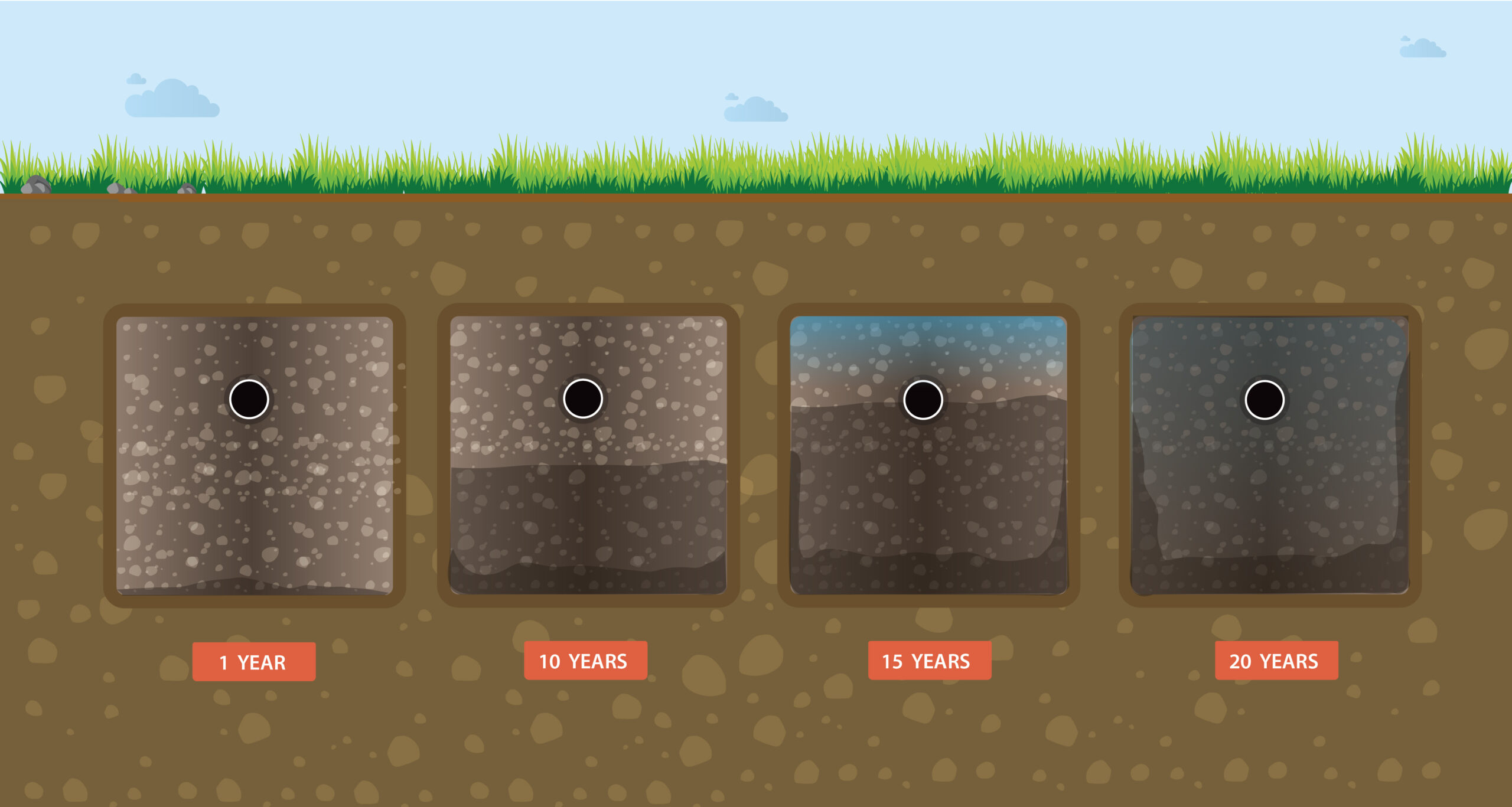
As liquid leaves the leach lines year after year, a layer called biomat builds up where the gravel and pipe meet the soil. Think of it as a tar-like layer. At first it’s thin, and water passes through it fine. Over the years it gets thicker, and new water can’t soak into the soil as easily.
When the water can’t leach out, it has nowhere to go. It backs up in the line first, then into the tank, and finally into the house. That’s why every system eventually reaches the end of its leach lines’ life.
Early signs of a failing leach field
The early signs are often subtle:
- Slow draining sinks, tubs, and toilets, especially throughout the house rather than one fixture
- Possible smells around the house or yard
If you notice these, it’s worth having someone take a look before it turns into a backup. Our post on slow drains and gurgling toilets covers more warning signs.
A clog or a failing leach line?
Not every backup means your leach field is done. When we come out, the first thing we do is find out whether the backup is caused by a clog or by leach line failure.
- A clog is the easier fix. The line can be hydrojetted to clear it, and once it’s open the material has somewhere to go again.
- A failing leach line is a different situation. If the soil around the line can no longer take water, a new line needs to be added so the liquid has somewhere new to go. That’s part of our septic system repair work, and it usually needs a permit (see what to expect with septic permits). For a new system, see our septic installation services.
Telling these apart matters, because the fix is completely different.
Pumping regularly helps your leach lines last longer
You can’t stop biomat from forming, but you can slow down how quickly your leach lines wear out. In general, plan to pump your tank every 3 to 5 years (more on that in how often to pump in Fresno). The more people in the home, the more often it needs pumping. High water use also adds stress, because more water saturates the leach field and means the tank needs pumping more often.
Pumping regularly, even when you’ve never had a backup, limits the solids that move from the tank out to the leach lines. Fewer solids reaching the lines helps extend the life of your system. Wet winters add extra strain too; see why backups pile up in the rainy season and holidays.
Noticing slow drains or smells?
If your drains are slowing down or you’re noticing odors, give Sequoia Pumping a call or send us a message through our contact form. We’ll figure out whether it’s a clog or your leach lines and talk through the options.
—
Related reading
- Slow Drains? Gurgling Toilets? What Your Septic Tank Is Trying to Tell You
- How Often Should You Pump Your Septic Tank in Fresno? (Hint: It’s Sooner Than You Think!)
- Drain wells vs. leach lines: site suitability and approvals
- Septic Permits for Repairs and New Systems in the Central Valley: What to Expect
