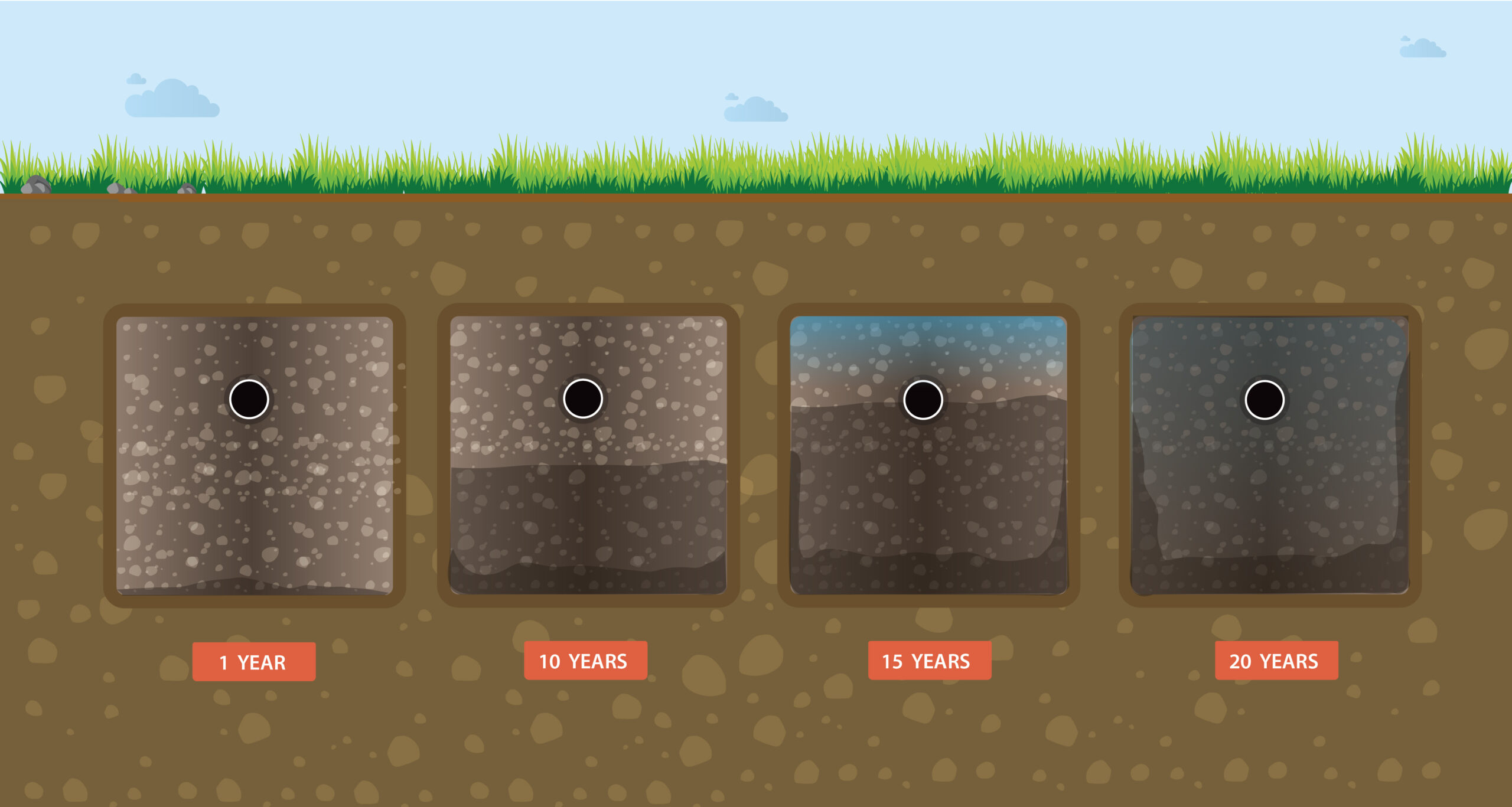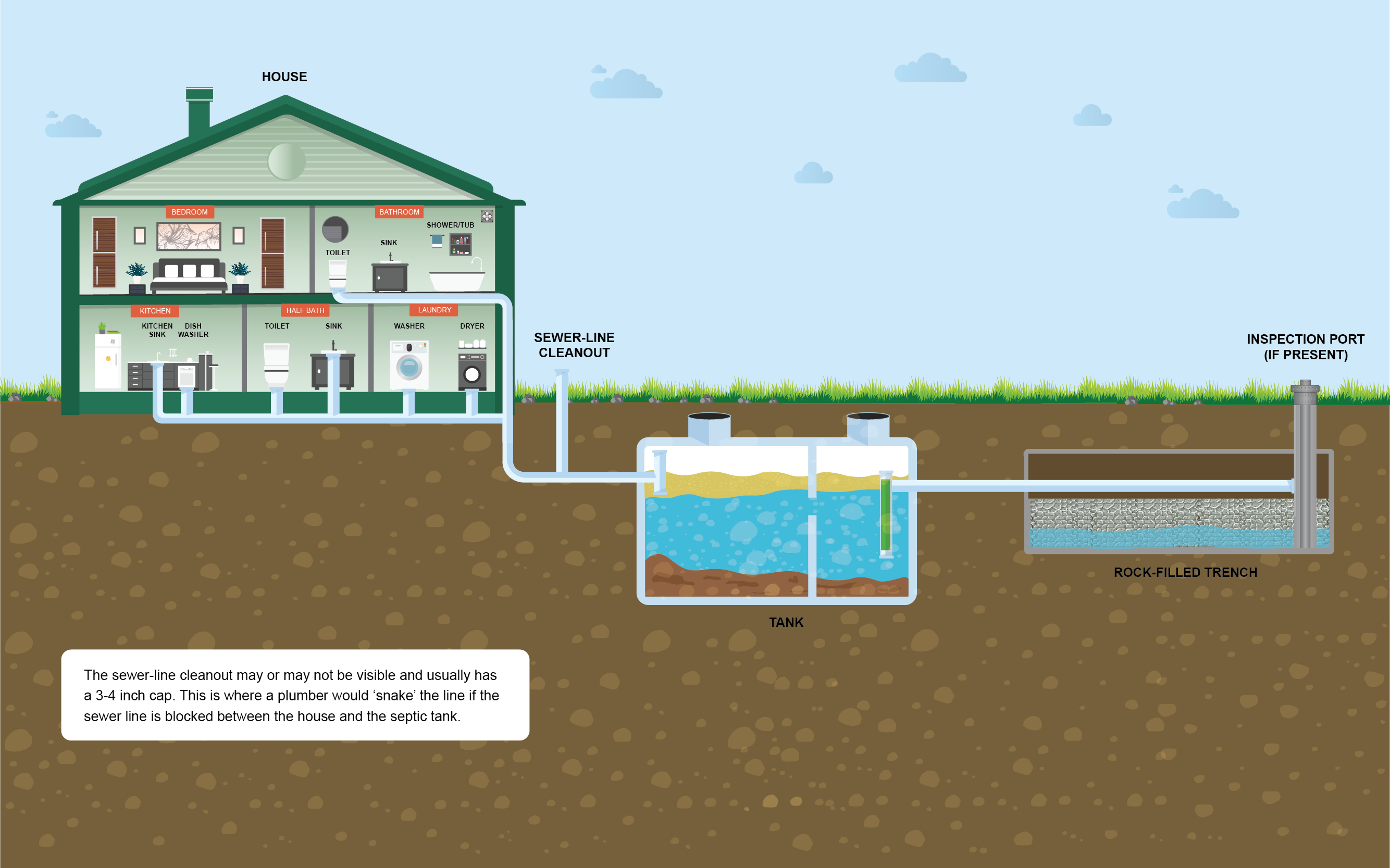

Leach lines and septic drain wells are two ways of dispersing liquid effluent after it leaves a septic tank. They are not interchangeable solutions for every property. Soil, groundwater, available space, and local approval requirements determine what can be used.
Sequoia Pumping provides new septic system installations and repairs, including new leach lines and septic drain wells, throughout our Central Valley service areas. This guide explains the terminology and the questions to ask before choosing work for your property.
Leach lines and septic drain wells: the difference
A leach field spreads effluent through a soil absorption area, commonly using a network of trenches. A septic drain well, also called a seepage pit, is a deeper excavation that receives effluent from a septic tank or another treatment unit. Here, “drain well” means a septic dispersal component—not a stormwater dry well or a drinking-water well.
The tank separates and retains solids; the dispersal area has a different role. Pumping the tank does not replace the need for a suitable, functioning dispersal system.
What determines whether a system fits a site?
Important considerations include soil characteristics, groundwater, usable space, setbacks, and the wastewater the system must handle. The required testing and design depend on the site and the approving authority. A general diagram cannot establish the correct layout, dimensions, or capacity for your project.
Neither a small lot nor clay soil is, by itself, a reason to select a septic drain well. The conditions must support the proposed dispersal system and comply with the applicable requirements.
High groundwater is a constraint, not a reason to dig deeper
A deeper pit must still maintain the required separation from groundwater. California’s OWTS Policy places specific restrictions on seepage pits and groundwater separation; local requirements and the project’s approval pathway also matter. Do not assume that a drain well is suitable because the water table is high or a leach field is struggling.
For background, read the State Water Board’s OWTS Policy. A qualified project professional and the responsible local authority should address how the requirements apply to your property.
What if an existing leach field or drain well is not working?
Describe the symptoms and gather any pumping records, inspection reports, system drawings, and permits. Adding another pit or line should not be treated as the automatic answer to poor drainage. The proposed work should address the cause and meet the requirements for the site.
Keep people and pets away from exposed sewage and unsafe openings. Never enter a septic tank or drain well.
Who approves the work?
Confirm the responsible authority for your property before construction. Fresno County identifies its Public Works and Planning Department as the agency overseeing the procedural and technical details of its Local Agency Management Plan. See the county’s Land Use Program information. Other jurisdictions may use different procedures.
Before accepting a project scope, clarify who will handle testing, design, permit applications, inspections, and restoration. Do not infer these responsibilities from a general service description.
Discuss your property with Sequoia Pumping
We offer pumping, inspections, installations, and repairs throughout our service areas in Fresno, Madera, Kings, and Tulare counties. Call (559) 233-2400 or request an estimate. Include your location, the problem or project you have in mind, and any existing plans or reports.
For additional background, see the EPA’s overview of septic system types.