

Sequoia Pumping installs new leach lines and provides septic system repairs throughout our Central Valley service areas. Based in Sanger, we serve Fresno, Clovis, Sanger, Madera, Kerman, Selma, Reedley, Fowler, Parlier, Del Rey, Easton, Caruthers, Visalia, Hanford, Lemoore, Dinuba, Kingsburg, Orange Cove, Orosi, Laton, Riverdale, Squaw Valley, Prather and Friant. We serve town by town rather than whole counties, so call (559) 233-2400 to confirm your address.
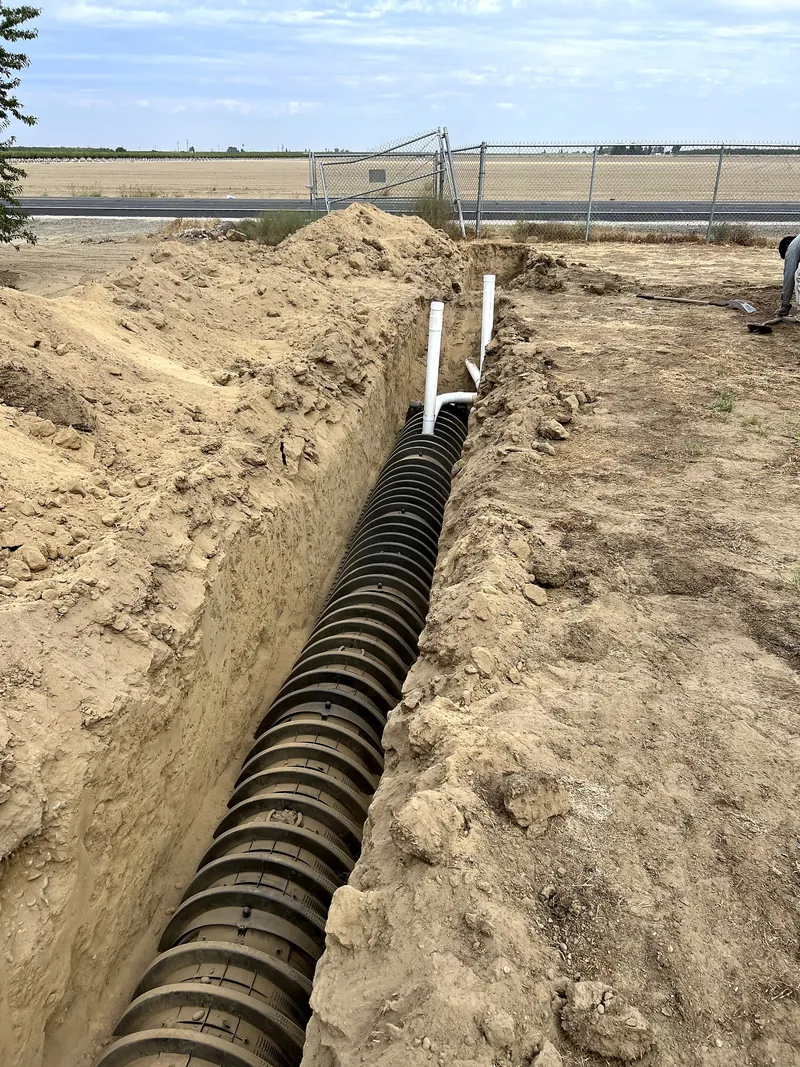
Leach lines, also called a leach field or drain field, are the part of a septic system that disperses liquid from the tank into the soil. Wastewater from the home flows into the septic tank. Solids settle to the bottom, and the liquid flows out to the leach lines. From there, the liquid soaks down into the soil.
If your drains are slow, sewage is backing up, or a problem returns after pumping, tell us what you are seeing. The symptoms help start the conversation, but they do not establish which repair your system needs. Contact us about new leach lines or a problem with an existing field, and we can discuss the work and the information needed for an estimate.
The early signs of a struggling leach field are often subtle:
These signs are a reason to have the system looked at. They do not, by themselves, confirm that the leach field has failed or that new lines are the right fix. A professional inspection is necessary to confirm a failing leach field. Not every backup means the leach field is done.
When we come out about a backup, the first thing we do is find out whether it is caused by a clog or by leach line failure. Depending on the cause, the site, and the approvals for the property, leach line repair work may include:
That repair work usually needs a permit. We also install new leach lines as part of a new septic system, or as a new dispersal area on an existing property, when the proposed system fits the site and the applicable approval requirements. A repair may address a specific issue; a new dispersal system is a different scope of work.
When an existing dispersal area has a problem, the appropriate work depends on the cause, site conditions, existing records, and applicable approvals. Adding more leach lines is not an automatic remedy for poor drainage. The proposed work should address the cause and meet the requirements for the property.
Before work begins, we discuss the proposed work and what is included in the estimate. An estimate depends on the proposed system, site conditions, access, and the approved work. We do not publish a single price because the scope and conditions vary. Tank size alone is not enough to price the project.
You do not need to open a tank or excavate to make an inquiry. It helps to have ready:
Keep people and pets away from exposed sewage or unsafe openings. Do not enter a septic tank or attempt to inspect its interior yourself.
Repairs and new systems generally need a permit before the work begins, and the plan has to fit your property and soil. Sequoia Pumping handles the permit process for you. That includes the required testing and design, the permit itself, and the inspections.
Confirm the responsible authority for your property before construction. Requirements can differ by jurisdiction and site. For properties in Fresno County, the county identifies its Public Works and Planning Department as the agency overseeing the procedural and technical details of its Local Agency Management Plan. Other jurisdictions may use different procedures.
Repairs are usually faster to permit than new systems. For example, if your leach lines are failing and a new line needs to be added, that is typically a quicker process than designing and permitting a whole new system. For a new system, a percolation test (often called a "perc test") is needed. It measures how well water soaks into the soil on your property, which helps determine what kind of system you need.
For simple systems, the permit process can be quick, often under about a week. Some properties need an engineered system, one with pumps and valves rather than a simple gravity layout. Those can take several weeks, because an engineer has to design the system first, and that design then goes through the permit process.
All of our services, including new leach lines and septic repairs, are available in the towns we serve. We serve town by town rather than whole counties, so call (559) 233-2400 to confirm your address.
We serve Fresno, Clovis, Sanger, Madera, Kerman, Selma, Reedley, Fowler, Parlier, Del Rey, Easton, Caruthers, Visalia, Hanford, Lemoore, Dinuba, Kingsburg, Orange Cove, Orosi, Laton, Riverdale, Squaw Valley, Prather and Friant.
Towns with their own service-area pages: Fresno, Clovis, Madera, Selma, Reedley, Visalia, Hanford, Lemoore, Dinuba, and Kingsburg.
Hours of service: Monday–Friday 6:30 AM–6:30 PM, Saturday–Sunday 8 AM–5 PM. Sequoia Pumping LLC is at 1555 N McCall Ave, Sanger, CA 93657.
Leach lines are the part of the system that disperses liquid from the tank into the soil. When that area is not working properly, the right fix depends on the cause, the site conditions, existing records and applicable approvals. Sometimes new leach lines are part of the answer, and sometimes they aren't.
It depends on what is wrong and what the site allows, so a symptom alone isn't enough to choose the fix. Depending on the cause and the approvals for the property, work may include hydrojetting a clog, adding a new line, distribution-box work, or replacing a whole leach field. We can review your system history and discuss the options.
Not automatically. Adding lines or pits is not a standard remedy for poor drainage, and the proposed work should address the cause and meet the requirements for the property. Soil, groundwater, available space and setbacks all affect what is possible.
Pumping may be part of the response, but the underlying cause still matters. Pumping removes accumulated material from the septic tank. It does not repair a damaged component or automatically restore a failing soil absorption area. A recurring problem should be evaluated rather than assumed to need another pumping visit.
Yes, most local governments require permits for septic system repairs or replacements. Confirm who approves septic work for your property before construction starts. Sequoia Pumping handles the permit process for you, including the required testing and design, the permit itself, and the inspections. Tell us your property location and what you're planning and we'll talk through the next steps with you.
Call (559) 233-2400 or send an estimate request through our contact page. Include your property location and tell us whether you need new leach lines or have a problem with an existing field.
You can also ask about septic pumping, a septic inspection (also called a certification), a new septic system, or a septic drain well.
